Copyright and your film
A short film about copyright and research films: copyright protects how a paper is expressed, not its ideas, facts, methods or findings, as the TRIPS Agreement and the WIPO Copyright Treaty say, with UK law's caution about copying a substantial part; the difference between a redrawn film and a film that shows the paper; which open licences allow a film that shows the paper; and that this is general information, not legal advice.
Transcript
Can a film explain someone else's paper? Copyright protects how a work is expressed: its words, its layout, its figures and its images. It does not protect the ideas, facts, methods or findings it describes. The WTO's TRIPS Agreement and the WIPO Copyright Treaty both say so.
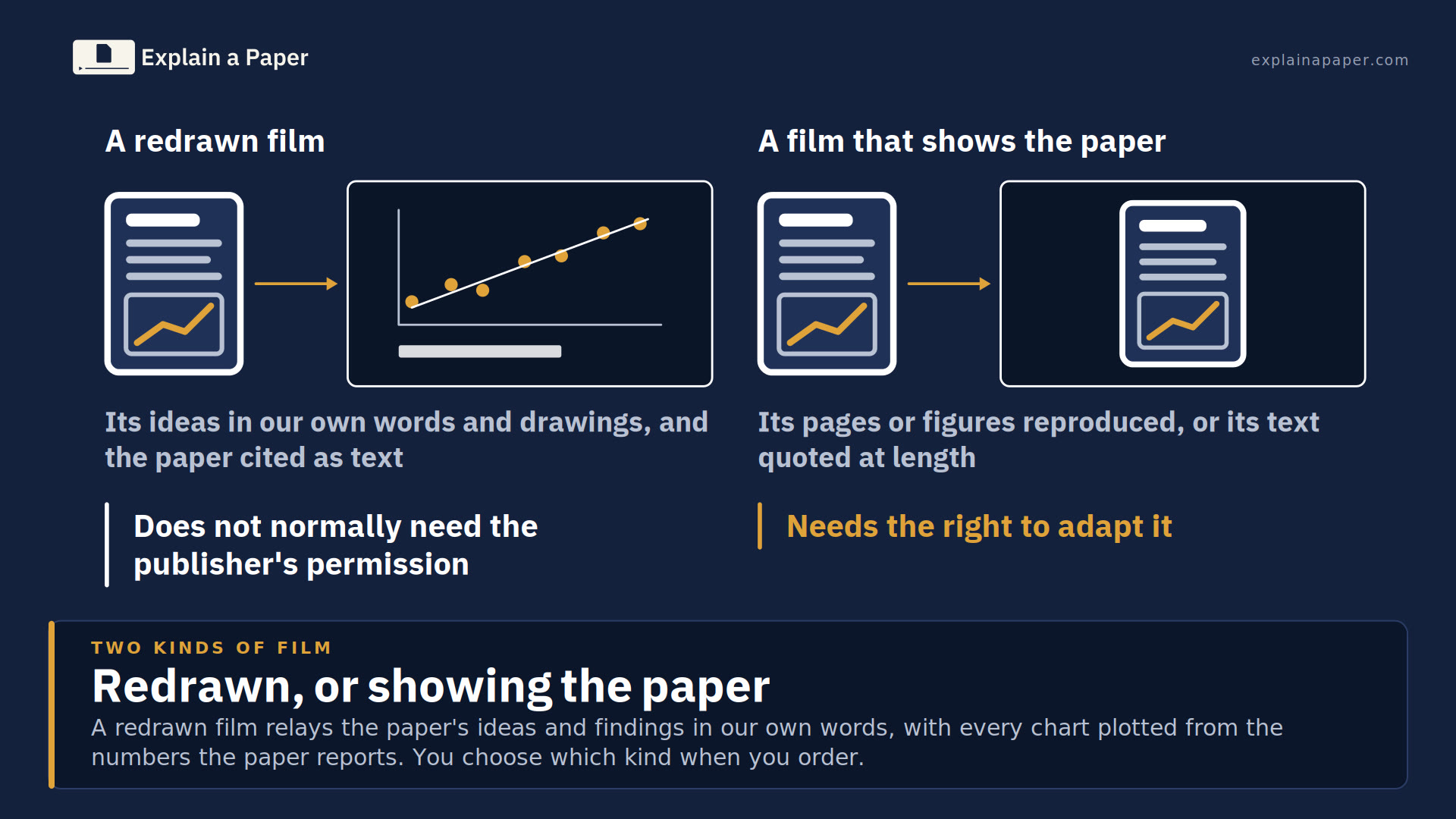
But UK law adds a caution: copying any substantial part of a work infringes, so a redrawn film must genuinely redraw. So there are two kinds of film. A redrawn film copies no text or images, so it does not normally need the publisher's permission. A film that shows the paper's pages needs the right to adapt it.
For a film that shows the paper, an open licence can give that right: the public domain, CC BY or CC BY-SA. CC BY-ND and CC BY-NC do not. This is general information, not legal advice about your paper. If your position is unusual, tell us when you order, and we will check it before we start.
Try it yourself: get started today at explainapaper.com.